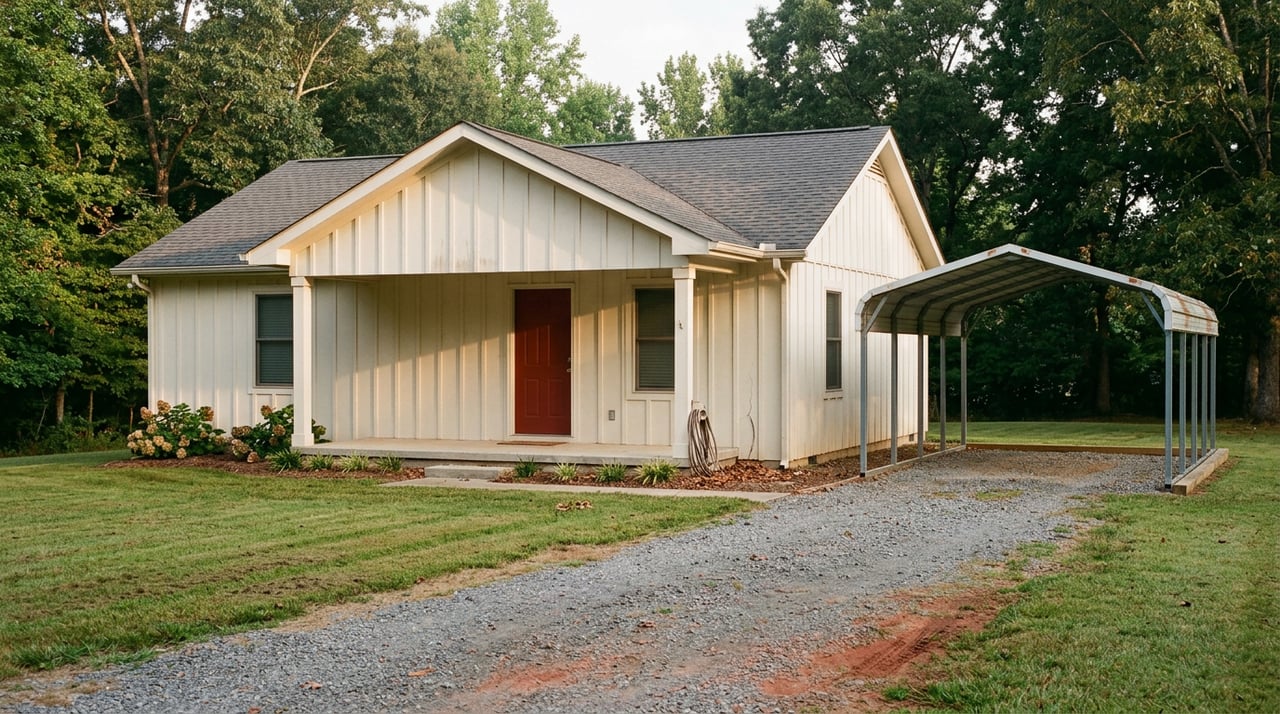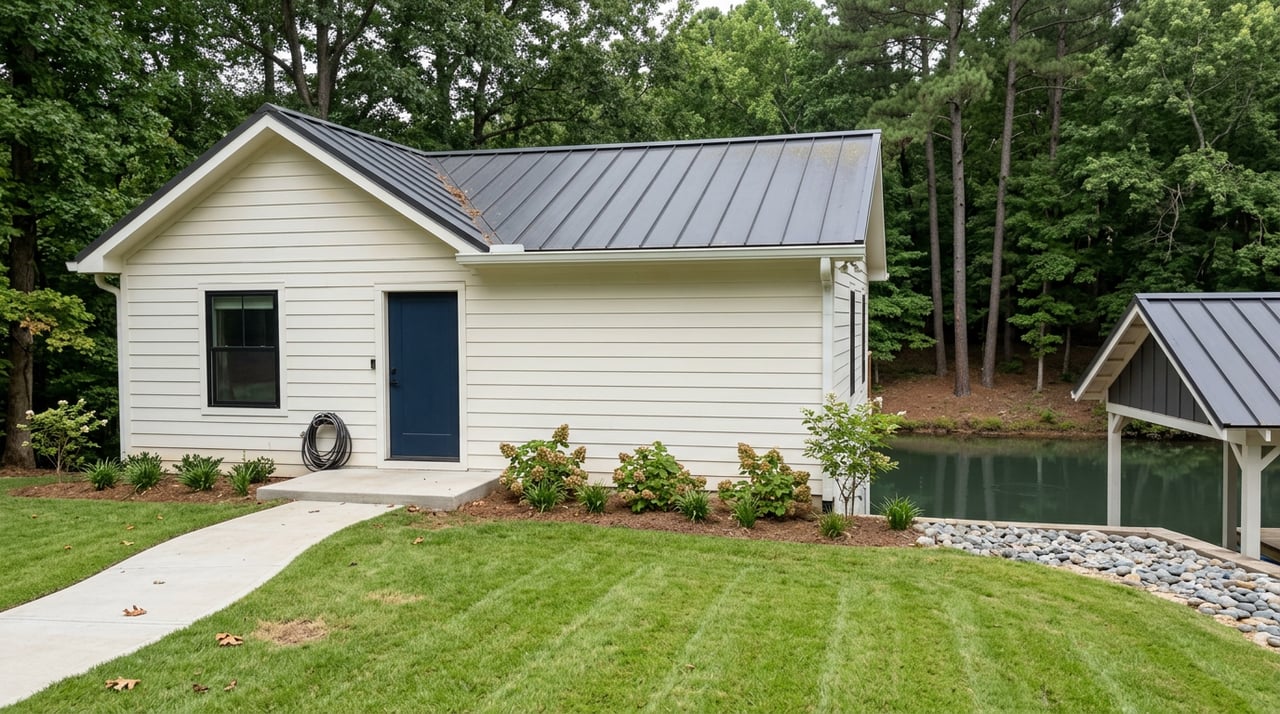
Why does the same acre of Jackson County dirt carry three different price tags depending on which listing site you open? Scroll through land listings around Pisgah long enough and you'll notice the word "unrestricted" doing a lot of heavy lifting. It shows up in nearly every ad, usually in capital letters, usually followed by an exclamation point. Buyers read it as a green light: no rules, no hoops, build whatever you want. That's only half true, and the half that's missing is the half that actually determines whether your land is buildable.
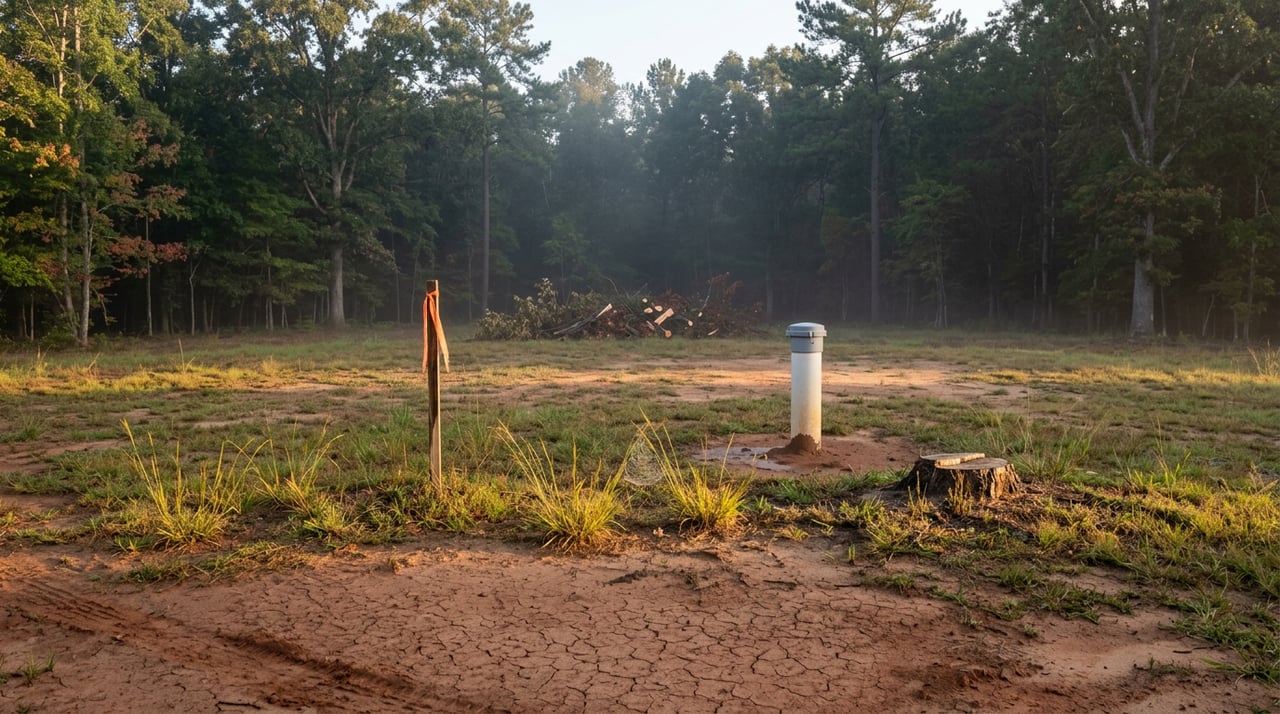
The real gatekeeper for a Pisgah homesite isn't a zoning office. It's a percolation test.
Why "Unrestricted" Shows Up On Every Pisgah Listing
Jackson County, where Pisgah sits, does not enforce a county-wide zoning ordinance in unincorporated areas, and it does not run a broad building permit and inspection program outside city limits. That's the mechanism behind all those listings promising freedom: no zoning hearing, no county building inspector standing over your shoulder while you frame a wall. You can put up a custom home, place a mobile home, or start a small farm on a Pisgah parcel without the approval process a buyer would face in an incorporated town.
That absence of county oversight is genuinely valuable if you're trying to build a homestead on a budget or bring in a manufactured home without a fight. It's also the entire reason "unrestricted" reads as a selling point instead of a red flag. But unrestricted describes what the county isn't checking. It says nothing about what state health regulations, recorded deeds, and basic soil chemistry are still checking.
What "Unrestricted" Does Not Cover
A parcel advertised as unrestricted can still carry real limits that have nothing to do with county zoning:
- Deed restrictions recorded in probate decades ago by a previous owner or subdivider, which can outlast the current listing language and remain enforceable
- Septic and well permitting through the Alabama Department of Public Health, which applies regardless of whether the county zones the land
- Floodplain rules if the parcel falls inside a FEMA-mapped Special Flood Hazard Area
- Easements for access or utilities that run with the land no matter what the sign at the road says
None of these show up in the word "unrestricted." All of them show up in the county records office, and none of them are optional just because a Facebook Marketplace description says the land is a blank canvas.
The Real Bottleneck Sits With the Health Department
Before Alabama will sign off on a septic system, state health rules require soil testing or a percolation test, arranged through a professional engineer, land surveyor, geologist, or certified soil classifier, with the local county health department reviewing the site and issuing what's officially called a Permit to Install. Soil that is very shallow, drains too slowly, stays too wet, or sits on a lot that's simply too small can fail that evaluation, and when it does, an engineer has to design a different kind of system before construction can start.
This is the step that catches acreage buyers off guard, not the zoning question. A five-acre tract with no deed restrictions and no HOA can still fail a perc test if the soil drains too slowly or the water table sits too close to the surface. If that happens, the land isn't automatically dead, but it does mean more engineering, more paperwork, and more money before a buyer who assumed "unrestricted" meant "move-in ready" gets to break ground.
The dollar figures back this up. National cost data on rural utility hookups puts well drilling at $5,000 to $10,000 and a new septic system at $3,400 to $11,500. Add those together and a buyer building from scratch on raw Pisgah acreage should budget somewhere between $8,400 and $21,500 for water and wastewater alone, before a single stud goes up. That's real money layered on top of whatever the land itself costs, and it's the number that "unrestricted" never mentions.
Three Sources, Three Very Different Prices
Ask what an acre of land near Pisgah actually costs and you'll get three different answers depending on where you look. These are current asking prices from active listings, not closed sales, but the spread between them tells its own story.
| Source | Coverage area | Metric | Figure |
|---|---|---|---|
| Land.com | DeKalb County | median price per acre | $7,843 |
| Southeastern Land Group | DeKalb County | quoted price range per acre | $10,000 to $21,000 |
| LandSearch | DeKalb County | average price per acre | $23,127 |
| LandSearch | Pisgah specifically | average price per acre | $26,426 |
That's roughly a three-fold spread for the same general region, and the gap isn't a typo. A median pulls toward the middle of the pack and gets less distorted by a handful of expensive outliers. An average gets dragged upward by large recreational tracts with creek frontage, mountain views, or timber value, the kind of parcel that sells for far more per acre than a plain wooded homesite. When a buyer compares a "cheap" median figure from one source against a "typical" average from another, they're not comparing apples to apples. They're comparing two different slices of the same market, and the slice that gets quoted in casual conversation is usually whichever number sounds best for the point someone's trying to make.
The practical takeaway is simple. Treat any single per-acre figure as a starting estimate, not a ceiling or a floor, and ask what's actually included in the comparable set before you anchor an offer to it.
Same Word, Different County Lines
Pisgah's position inside Jackson County matters because the rules genuinely change once you cross into DeKalb County or into an incorporated town like Fort Payne or Rainsville. DeKalb County's landscape splits between Lookout Mountain and Sand Mountain, separated by Wills Valley, and that terrain variety is part of why recreational land near attractions like DeSoto State Park and Little River Canyon commands a premium that a plain agricultural parcel outside Pisgah won't carry. DeKalb County also carries a notably low property tax rate, around 0.34% compared to a 0.90% national average, which helps explain why the carrying cost on acreage stays manageable even when the purchase price climbs.
None of that means Jackson County's rules automatically apply once you're comparing a Pisgah tract to one near Fort Payne or Rainsville. Zoning status, tax treatment, and permitting requirements are set at the county or city level, and a buyer moving between Sand Mountain towns should confirm each parcel's status directly rather than assuming what held true in one county holds true in the next.
Before You Write an Offer on Pisgah Acreage
- Contact the local county health department to ask whether a perc test has already been done on the parcel and whether the results are on file
- Pull the deed and check probate records for any recorded restrictions or covenants that predate the current listing
- Confirm whether any part of the property falls inside a FEMA flood zone, since that affects both building requirements and insurance costs
- Review the survey or plat for recorded easements that could affect where a driveway, well, or septic field can go
- If a septic permit or soil test already exists for the property, ask the seller for a copy before you assume the land is move-in ready
None of these steps require a lawyer or a lengthy process. Most of them are a phone call or a records request. But skipping them is exactly how a buyer ends up owning acreage they can't actually build on.
A Few Straight Answers
Does "unrestricted" mean I can put a mobile home on the land? Usually yes in unincorporated Jackson County, since there's no county zoning ordinance to prohibit it. Confirm the parcel is actually outside city limits first, since incorporated towns can and do apply their own rules.
How long does a perc test take? The test itself is usually done in a single site visit, but scheduling with a certified installer and getting the paperwork back from the health department can take anywhere from about a week to several weeks depending on demand and the time of year.
If the land fails a perc test, is it worthless? Not necessarily. When soil is too shallow, too wet, or drains too slowly for a conventional system, Alabama rules call for an engineer to design a different kind of system for the site. That costs more and takes longer, but it can make an otherwise unsuitable lot buildable.
Land around Pisgah can absolutely be the right move for a buyer who wants room to build without a zoning fight. The word "unrestricted" just isn't the whole story, and the questions that matter most are the ones a listing photo can't answer. If you're comparing acreage on Sand Mountain and want someone to walk the actual permitting steps with you before you make an offer, Ryan Doolittle is happy to talk through what a specific parcel will and won't let you do. Let's Connect.